Immediate stabilization to limit secondary damage
We identify wet materials, isolate affected areas, and start controlled drying so the loss does not spread into adjacent rooms, wall cavities, or flooring systems.
Serving Tempe, Arizona & surrounding areas
24/7 Emergency Response
One call instead of ten No web forms, no callback spam 24/7 Emergency Response
Insurance Water Damage · Tempe, Arizona
When a leak or overflow damages your home, the next steps matter. We handle the drying and restoration work and help you document the loss so your insurance claim has clear, job-ready details.
✓ Skip the 3-hour Google rabbit hole — we’ve already done the vetting
✓ One conversation, not ten voicemails and seven web forms
✓ 24/7 emergency response — talk to a real person who actually knows Tempe
Rapid loss stabilization
Moisture mapping and drying records
Insurance-ready documentation
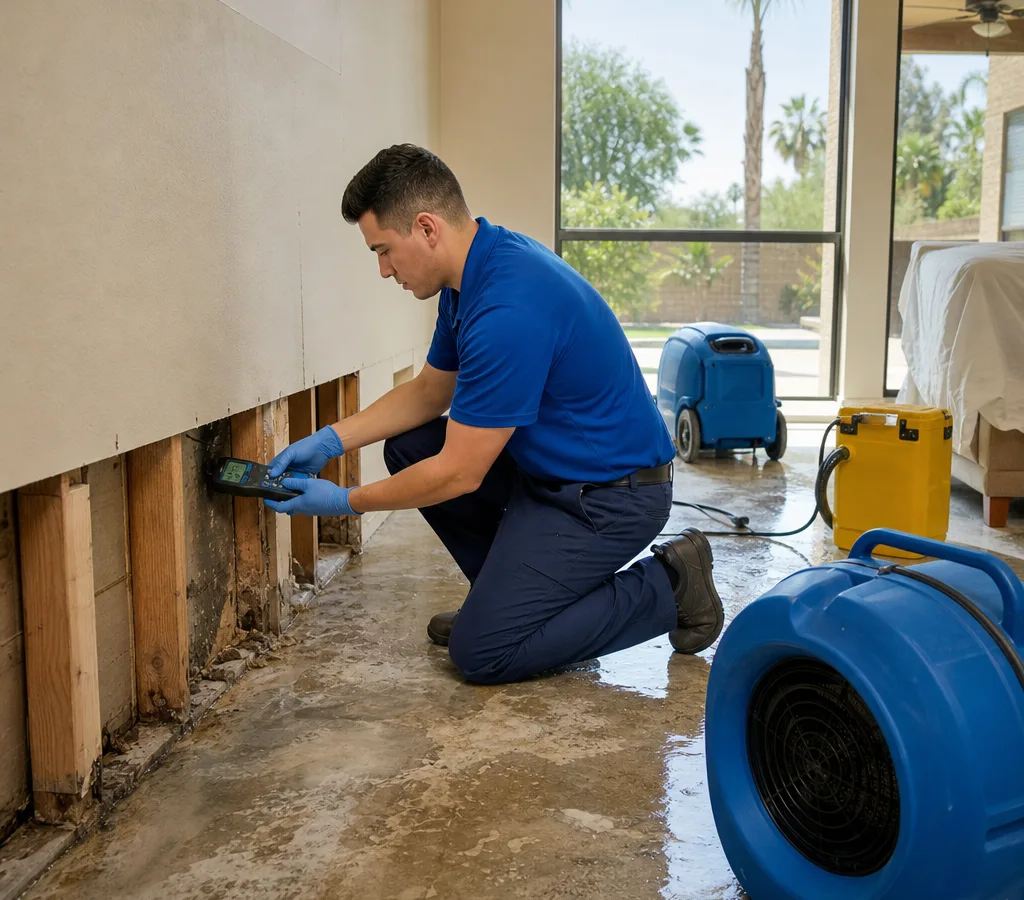
Stabilize and Document
If you are searching for homeowners insurance water damage Tempe AZ help, you are usually dealing with two problems at once: stopping the damage from getting worse and keeping the claim clean, accurate, and well documented.
Most homeowners insurance policies draw a line between sudden, accidental water damage—often covered—and long-term seepage or deferred maintenance, which is often excluded. The practical takeaway is simple: act fast, document what happened, and get a professional drying plan in place.
Tempe homes see water losses from supply-line breaks, refrigerator or dishwasher leaks, toilet overflows, water heater failures, and monsoon-driven intrusion. Wet drywall, baseboards, flooring, wall cavities, and cabinets can deteriorate quickly.
Tempe AZ Water Damage Restoration focuses on the part you can control: rapid stabilization, a clear scope of work, and documentation an adjuster can actually use.
Claim-Ready Restoration
We identify wet materials, isolate affected areas, and start controlled drying so the loss does not spread into adjacent rooms, wall cavities, or flooring systems.
We document readings and drying progress in a way that supports decisions about what can be dried in place and what needs removal.
Insurance claims move smoother when the work is described plainly: what was damaged, what is being dried or removed, and what is being restored.
We can walk you through how carriers typically view sudden loss versus ongoing seepage, what photos to take, and what information to share with your adjuster.
We work within the reality of approvals and inspections while still prioritizing safe drying and preventing avoidable damage.
Protect the Claim
The first hours after a water loss often decide how expensive and disruptive the project becomes.
Our water damage restoration in Tempe work is built around insurance-aligned documentation and professional drying.
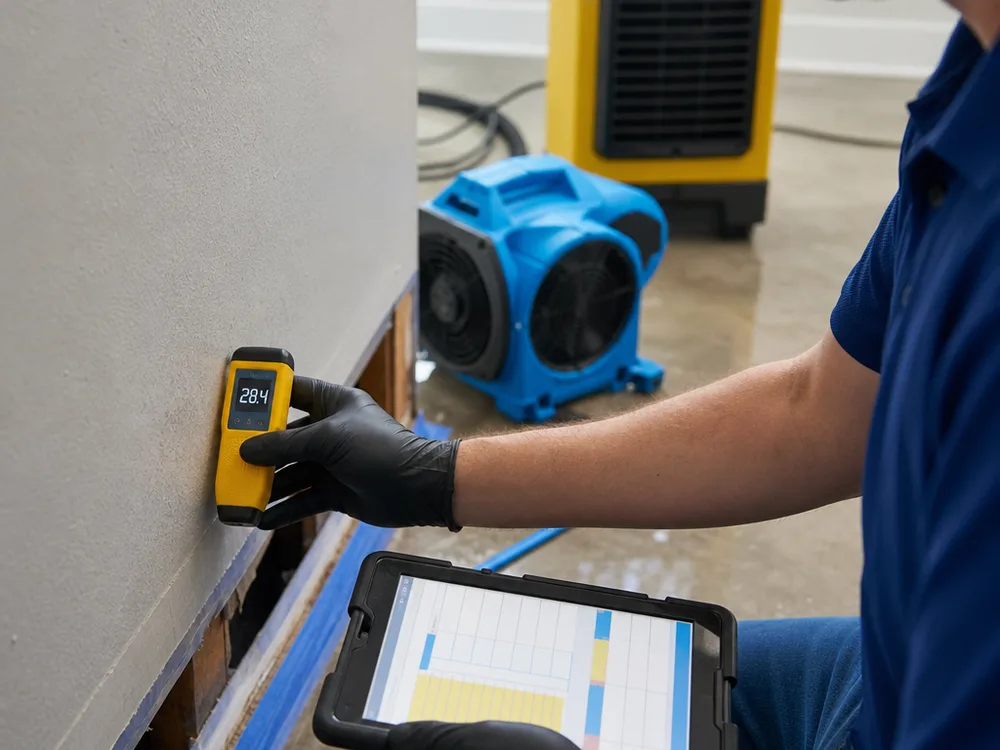
From Loss to Dry Standard
A controlled process defines the true loss area, supports safe drying, and creates a clear record for repair planning and insurance review.
We inspect visible damage and test likely migration areas like adjacent rooms, toe-kicks, and wall cavities to define the true footprint of the loss.
If needed, we set containment and confirm conditions are appropriate for drying. Contamination risk from an overflow is handled differently than a clean supply-line leak.
We place air movers and dehumidification based on the materials involved and how moisture is behaving, not just room size.
We capture pre-mitigation condition photos, moisture readings, and notes about affected materials to support the adjuster's review.
Drying is not set-and-forget. We track progress, move equipment as conditions change, and document when materials reach dry standard.
Once the structure is dry, we outline what needs to be repaired or replaced. Separating mitigation from rebuild keeps scopes clear for insurance review.
Restoration Costs
For a covered water loss in Tempe, the mitigation portion of water damage restoration typically ranges from about $1,200 to $4,500 for a small to moderate affected area, while larger losses with significant material removal and multiple rooms can run $6,000 to $15,000+.
Final pricing depends on the category of water, how far it spread—including under flooring and cabinets—required containment, equipment days, and what materials can be dried versus removed. The exact scope and cost are confirmed after an on-site inspection and moisture mapping.
Customer Proof
Our adjuster asked for moisture readings and a clear scope. They had everything organized, and the drying plan made sense. It kept the claim from turning into a guessing game.
Maria G.
A supply line leak soaked the cabinet base and the flooring edge. They documented the wet areas we couldn't see and explained what had to come out versus what could be dried.
Derek L.
Homeowner Answers
Get straightforward answers about coverage, documentation, drying timelines, water categories, and working with your carrier.
It often covers sudden and accidental water damage, but it commonly excludes long-term seepage, repeated leaks, or maintenance-related issues. Your adjuster makes the coverage decision, and the best way to support the claim is to document the source, timeline, and affected materials right away.
The most helpful items are clear photos or video of the source and damaged areas, a list of affected rooms and materials, and professional moisture mapping and drying logs. Documentation showing migration under toe-kicks or beneath flooring edges can be especially important because damage is not always visible.
No, drying and mitigation usually should start as soon as possible to prevent the loss from expanding. You can preserve the claim by taking photos before work begins and keeping a clear record of what was wet, what was removed, and why.
Many losses dry in about 3 to 5 days, but timelines change based on material type, how much water intruded, and whether moisture is trapped under flooring or inside wall cavities. We monitor conditions and document when materials reach an appropriate dry standard rather than relying on a fixed number of days.
Clean water usually comes from a supply line or faucet, while contaminated water can come from toilet overflows, drain backups, or outdoor intrusion. Contaminated water typically requires more controlled removal and cleaning steps, which can affect both the scope and claim documentation.
Yes. We provide the job documentation and scope details your adjuster typically needs to review the loss, and we can answer technical questions about drying methods and affected materials. You stay in control of claim decisions while we keep the restoration work clear and well supported.
Act Before Damage Spreads
If you are dealing with water damage and want insurance-ready documentation, start with an on-site inspection and moisture mapping. We will explain what we found, what needs to happen next, and what your adjuster will likely ask for.