
Moisture mapping, not guesswork
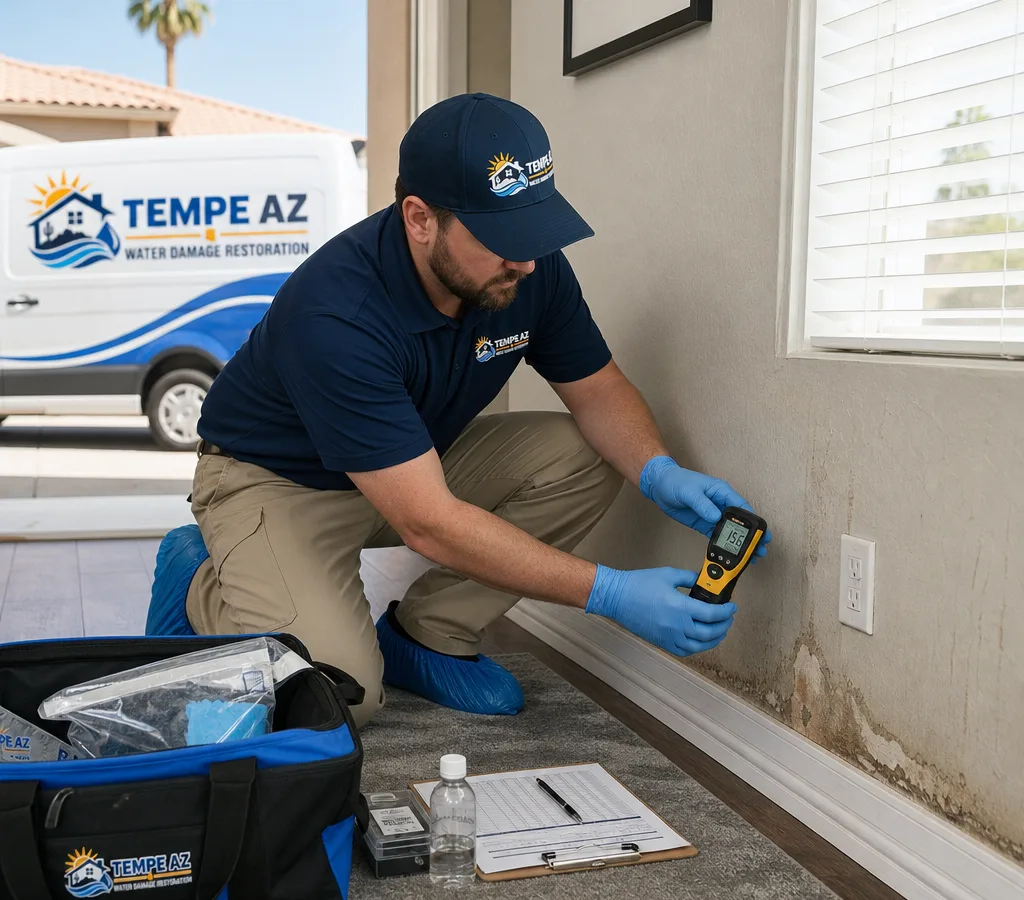
We track moisture patterns with non-invasive meters and targeted checks so you know what is wet, what is dry, and what likely caused the growth.
Serving Tempe, Arizona & surrounding areas
24/7 Emergency Response
Mold Inspection · Tempe, Arizona
If you smell a musty odor, see staining, or had a recent leak, a professional inspection can confirm whether mold is present, identify the moisture source, and document what to do next before repairs begin.
Clear Answers First
A good inspection does more than say “mold” or “no mold.” It explains what is happening, where moisture is getting in, and how to stop it so the problem does not come back.
Our mold inspection Tempe clients usually reach out after one of three triggers: a plumbing leak, a roof or window leak after storms, or ongoing humidity and condensation around bathrooms, laundry areas, and HVAC closets. In Tempe, evaporative coolers and older ducting can also create damp areas if they are not draining or venting correctly.
Tempe AZ Water Damage Restoration provides mold inspections for homes and businesses in and around ZIP 85280. You get a straightforward assessment, photo documentation, and next steps you can use with a landlord, property manager, insurer, or restoration contractor. If your concern started with a leak or flooding, water damage restoration in Tempe is often the right first move to dry materials before any rebuild decisions are made.
Inspection Scope
We track moisture patterns with non-invasive meters and targeted checks so you know what is wet, what is dry, and what likely caused the growth.
We focus on plumbing walls, under sinks, behind toilets, around tubs and showers, laundry hookups, water heater closets, and around supply lines and drain traps.
Air and surface samples can be collected when visual evidence is unclear, when documentation is needed for a landlord or insurer, or when occupants have health concerns.
You receive a written summary of observed conditions, readings, and locations of concern, along with photos that support the findings.
We explain what should be corrected first—the moisture source—what materials may need removal, and what containment and cleaning approach is typically appropriate.
Careful Investigation
A mold inspection is a combination of building-science basics and careful documentation.
We start with a walkthrough and questions about the timeline: when the odor started, whether there was a leak, if repairs were attempted, and which rooms feel humid or show staining. Then we inspect likely entry points and wet zones.
Common tools and methods include:
If there is visible microbial growth, we document extent and conditions rather than disturbing it. Disturbing mold can spread spores, so the goal is to inspect safely and leave the space stable until a plan is in place.
From Concern to Clarity
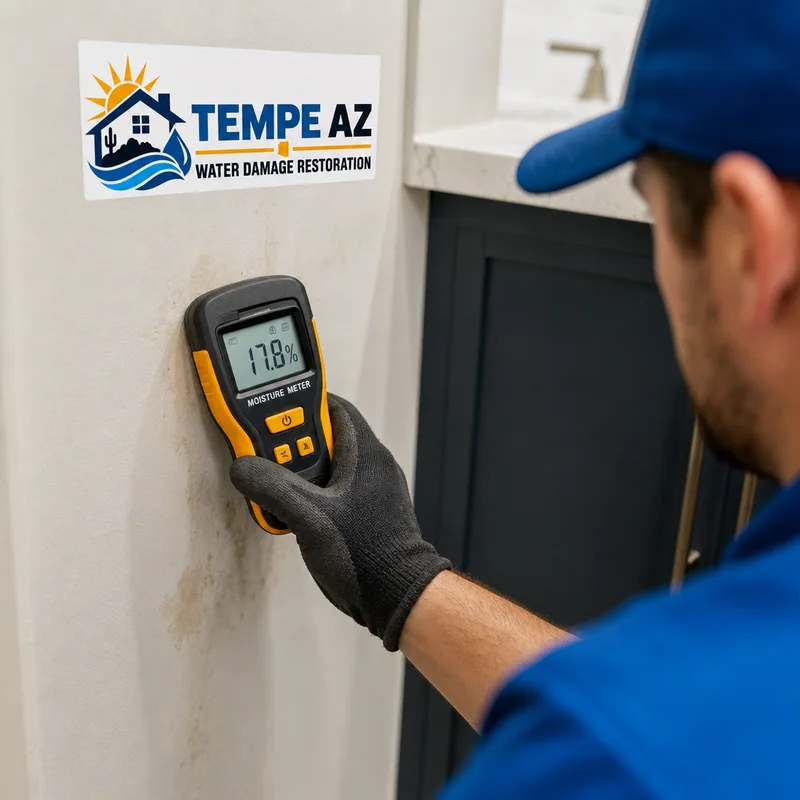
A structured assessment connects observed conditions to moisture readings, documentation, and practical next steps.
We confirm the address, the areas of concern, whether anyone has health sensitivities, and if there has been recent water intrusion or HVAC issues.
We inspect the suspect rooms and adjacent spaces, take moisture readings, and look for pathways such as plumbing penetrations, window frames, door thresholds, or roof leak indicators.
If sampling is appropriate, we take controlled samples and document exactly where they were collected so results are meaningful and actionable.
You get photos, a written summary of observations and readings, and next steps. If remediation is needed, we outline what should happen first and what can wait.
Inspection Pricing
Mold inspection in Tempe typically ranges from about $250 to $650 for many homes, with larger properties or more complex investigations sometimes running $700 to $1,200+. A basic visual inspection with moisture readings is usually on the lower end, while inspections that include multiple lab samples cost more.
Final pricing depends on the size of the property, how many areas need testing, accessibility such as attics or tight crawlspaces, and whether prior repairs made the source harder to trace. Exact cost is confirmed after we understand the scope and any sampling needs.
If you need documentation for a landlord, buyer, or insurer, or want to know what is safe to remove versus what needs professional containment, get a clear written assessment.
Call for Emergency HelpHomeowner Answers
Understand when testing helps, what happens during the visit, and how to prepare without disturbing the area.
A visual inspection with moisture readings is often enough when there is clear growth and the priority is stopping the moisture and planning removal. Testing becomes more useful when you need third-party documentation, when there is a musty smell with no visible source, when occupants have heightened health concerns, or when you want to compare indoor air to outdoor baseline conditions.
Most inspections take about 60 to 120 minutes on site, depending on the number of rooms and whether we are tracing an active moisture problem. If sampling is taken, lab turnaround is typically a few business days, and we will explain what results mean in plain language.
Yes, locating the moisture source is a core part of a proper inspection because mold returns if materials stay damp. We look for patterns around plumbing, bathrooms, laundry hookups, exterior openings, and HVAC-related condensation, then confirm suspected areas with readings rather than relying on appearance alone.
In most cases, yes, because an inspection is non-destructive and does not involve aggressive disturbance of suspected growth. If we see conditions that pose a higher risk—large visible growth, heavy odor, or sensitive occupants—we will recommend practical precautions for the day of the visit and the period before remediation.
Do not bleach or scrub the suspected area, since that can change what we can document and may spread spores. Clear access to under-sink cabinets, HVAC closets, and the area around any recent leaks, and share any photos from the time the leak happened if you have them.
Yes, we inspect rentals and multi-unit situations, and we can provide written findings that help communicate with property management. If the concern is shared walls or recurring moisture, we document conditions in the affected unit and note indicators that point to a broader building source.
We can explain what the findings mean and what should happen next, including correcting the moisture source and the typical containment and removal approach. If the underlying issue started with a leak or flooding, addressing drying and material condition early is important, and our team can discuss options after the inspection.
Start With Clear Findings
Tell us what you are seeing or smelling and when it started. We will schedule a Tempe mold inspection, document the conditions, and walk you through the next steps so you can make confident decisions about repairs or remediation.