Moisture mapping and source tracking
We check walls, floors, and adjacent rooms to find where water traveled, not just where stains appear. The goal is to stop re-wetting and prevent a second outbreak.
Serving Tempe, Arizona & surrounding areas
24/7 Emergency Response
One call instead of ten No web forms, no callback spam 24/7 Emergency Response
Mold Remediation · Tempe, Arizona
If water got in, mold can start fast. Get a clear plan to dry the structure, stop growth, and make the space safe to use again.
✓ Skip the 3-hour Google rabbit hole — we’ve already done the vetting
✓ One conversation, not ten voicemails and seven web forms
✓ 24/7 emergency response — talk to a real person who actually knows Tempe
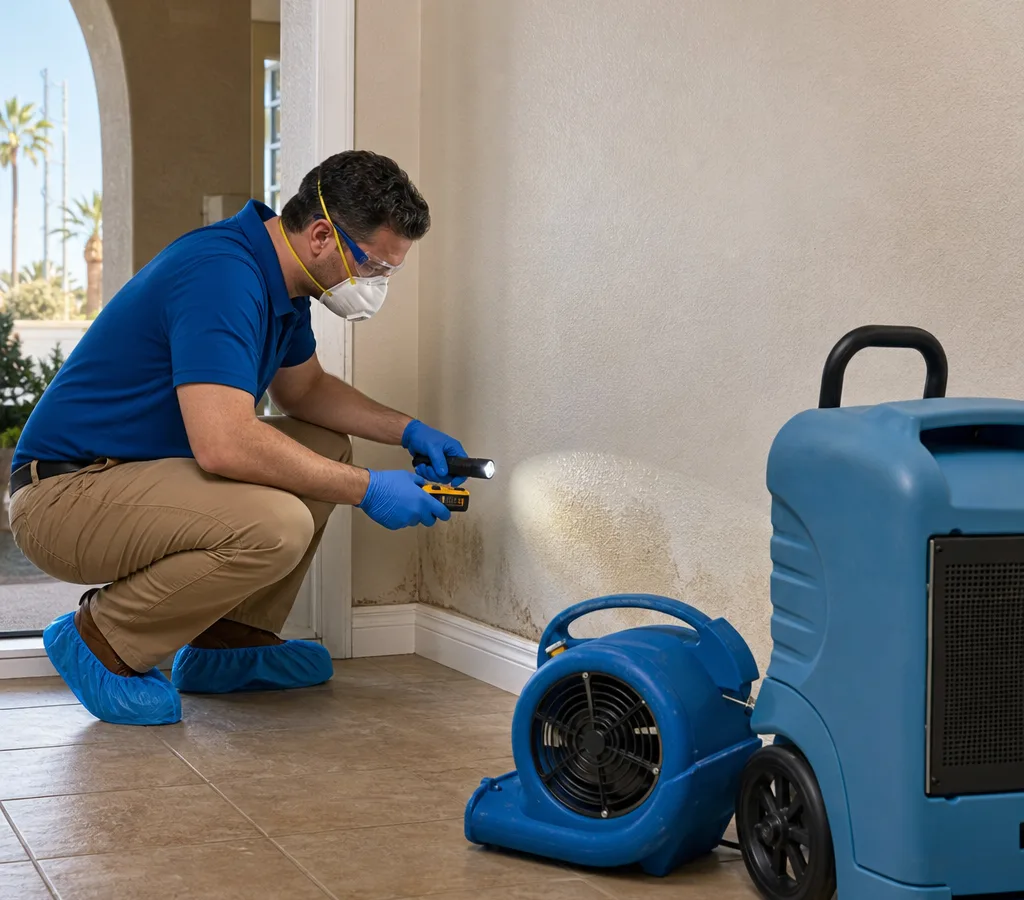
Moisture mapping
Controlled containment
Monitored structural drying
Immediate First Steps
If you are dealing with mold after water damage Tempe homeowners typically see it show up in the first few days: a musty smell, discoloration on drywall, bubbling paint, or swelling baseboards. The fastest way to limit spread is to control moisture, not to spray bleach and hope.
Start with these steps:
Tempe's heat can trick people into thinking everything will dry on its own. In practice, water hides in wall cavities, under plank flooring, and inside cabinet toe-kicks where air does not move. Professional drying uses measurement and equipment placement based on readings, not guesswork.
Hidden Moisture
Mold needs moisture, a food source, and time. After water damage, the food source is usually building material: paper facing on drywall, wood framing, dust in carpet pad, or cellulose in insulation. The part you see may dry while the part you cannot see stays wet.
Common Tempe scenarios where mold follows water damage:
Our approach focuses on locating trapped moisture, setting containment when needed, and drying the structure to appropriate targets before closing anything back up. When removal is required, affected porous materials are taken out and disposed of correctly, and remaining surfaces are cleaned using methods that fit the material and condition.
Controlled Remediation
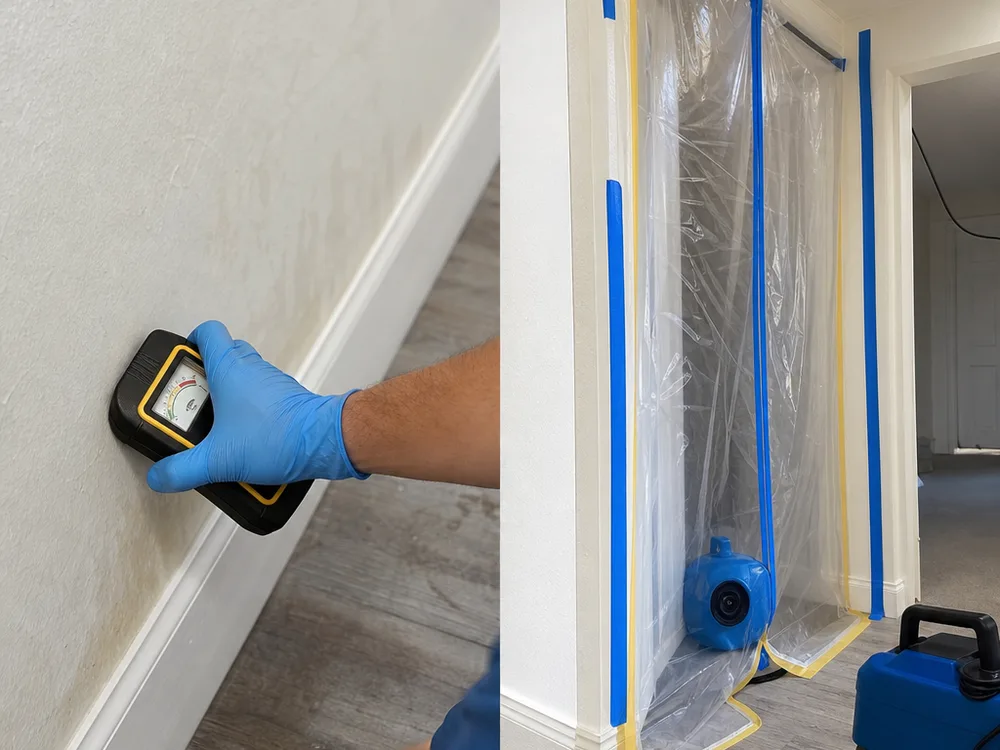
We check walls, floors, and adjacent rooms to find where water traveled, not just where stains appear. The goal is to stop re-wetting and prevent a second outbreak.
When there is visible growth or heavy odor, we isolate the work area so disturbed spores do not migrate to living spaces.
Drywall, insulation, carpet pad, and swollen composite cabinetry often cannot be reliably cleaned. Removing only what is needed keeps the scope controlled.
We HEPA-vacuum and clean remaining surfaces to remove settled particles before and after remediation steps.
Air movers and dehumidifiers are positioned based on readings, then adjusted as materials dry. Drying without monitoring leaves wet pockets behind.
You get a written scope, what areas are impacted, what will be removed, and what the drying plan is so you can make decisions without pressure.
Measured From Start to Finish
A controlled sequence identifies the wet materials, limits spread, removes what cannot be saved, and verifies dryness before rebuilding.
We identify the affected materials, likely pathways under flooring or inside wall cavities, and immediate safety concerns. If odor is present without visible growth, we treat that as a moisture-tracking problem first.
We protect flooring and set containment when needed, especially around bedrooms, HVAC returns, and high-traffic areas. The goal is to keep debris and airborne particles controlled.
Unsavable porous materials are removed. Remaining framing and surfaces are cleaned with methods appropriate to the substrate, then HEPA-detailed.
We place dehumidification and airflow to dry the structure, not just the room air. Drying targets depend on the materials involved and baseline conditions.
We re-check readings and adjust equipment. When materials reach acceptable dryness, we document the condition so rebuild work can start with confidence.
Project Pricing
Most mold-after-water-damage projects in Tempe typically range from about $1,200 to $6,500+, depending on how far water traveled and what materials have to be removed. A small, contained cabinet or closet area is often on the lower end, while multi-room drywall and flooring removal with containment and extended drying lands higher.
Final pricing changes with affected square footage, whether insulation or flooring is involved, access such as tight cabinets or multiple levels, and how long materials stayed wet. The exact cost is confirmed after an on-site inspection and moisture mapping.
If you smell mustiness or see spotting after a leak, getting the moisture measured early usually reduces how much material has to come out later.
Call for Emergency HelpLocal Building Conditions
Mold after water damage is rarely a single-spot problem. Water follows gravity and airflow, then collects at transitions: baseboards, door thresholds, the back of closets, and the bottom plates inside walls.
In Tempe, many properties include slab foundations and hard-surface flooring. When water gets under floating floors or into underlayment, the top surface can look fine while the underside stays wet. In apartments and condos, leaks can migrate between units through shared walls, plumbing chases, and floor penetrations, which is why measurement matters as much as removal.
If you are coordinating with a property manager, an HOA, or a commercial tenant improvement team, a written scope that states the affected areas, containment approach, and drying plan helps everyone stay aligned. For clients who also need help with the broader cleanup and dry-out, Tempe AZ Water Damage Restoration handles water damage restoration in Tempe so the moisture source, drying, and mold risk are addressed in one plan.
Homeowner Answers
Get straightforward answers about growth timelines, cleaning, containment, drying, and what to expect during remediation.
Mold can begin growing within 24 to 48 hours when materials stay damp, even if the room feels dry. In Tempe, warm conditions can speed up evaporation on the surface while leaving wall cavities and padding wet, which still supports growth.
Bleach is not a reliable fix for mold on porous materials like drywall, wood, or grout because it does not penetrate evenly and can add moisture. The better first step is to stop the water source, keep the area undisturbed, and get moisture readings so the real wet materials are identified.
No, drywall removal depends on how far the moisture wicked and whether the paper facing is affected. If mold is on the surface but moisture is limited and the drywall is structurally sound, targeted cleaning and drying may be possible; if the cavity is wet or the paper is compromised, removal is usually the safer choice.
Often yes for small, contained areas, but it depends on where the work is and who is in the home. If the affected area is near bedrooms, HVAC returns, or a main hallway, we may recommend limiting access or temporarily relocating sensitive individuals until containment and cleaning are complete.
Containment means isolating the affected area with plastic barriers and controlled airflow so dust and spores do not spread during removal and cleaning. It is commonly used when there is visible growth, heavy odor, or demolition is needed.
Sometimes, but persistent odor usually means there is still damp material, growth, or contaminated dust in hidden areas like under flooring or inside wall cavities. A proper plan combines moisture mapping, drying, and cleaning so the odor source is removed rather than masked.
Many projects take 1 to 3 days for containment, removal, and cleaning, plus additional drying time that can run several more days depending on materials and the amount of trapped moisture. The timeline is driven by measured dryness, not a calendar estimate.
Stop Hidden Moisture
Tell us what happened and where you are seeing signs of moisture or mold. We will inspect, explain the scope in plain language, and outline the next steps to dry and restore the area safely in Tempe.