Water control and safety checks
We identify where the water is coming from, help you stabilize the situation, and flag safety concerns like wet electrical areas, compromised drywall, or contaminated stormwater.
Serving Tempe, Arizona & surrounding areas
24/7 Emergency Response
One call instead of ten No web forms, no callback spam 24/7 Emergency Response
Monsoon Water Damage · Tempe, Arizona
When summer storms push water into your home or business, speed matters. Get a clear plan, fast dry-out, and documented restoration work that helps prevent warped materials, hidden moisture, and mold growth.
✓ Skip the 3-hour Google rabbit hole — we’ve already done the vetting
✓ One conversation, not ten voicemails and seven web forms
✓ 24/7 emergency response — talk to a real person who actually knows Tempe
Stormwater assessment
Moisture mapping
Drying and repairs
Rapid Storm Response
Monsoon water damage Tempe AZ usually starts the same way: wind-driven rain finds a weak point, water backs up at a doorway, or runoff pools fast where hardscape meets the slab. What happens in the first 24 to 48 hours is what determines how much material can be saved.
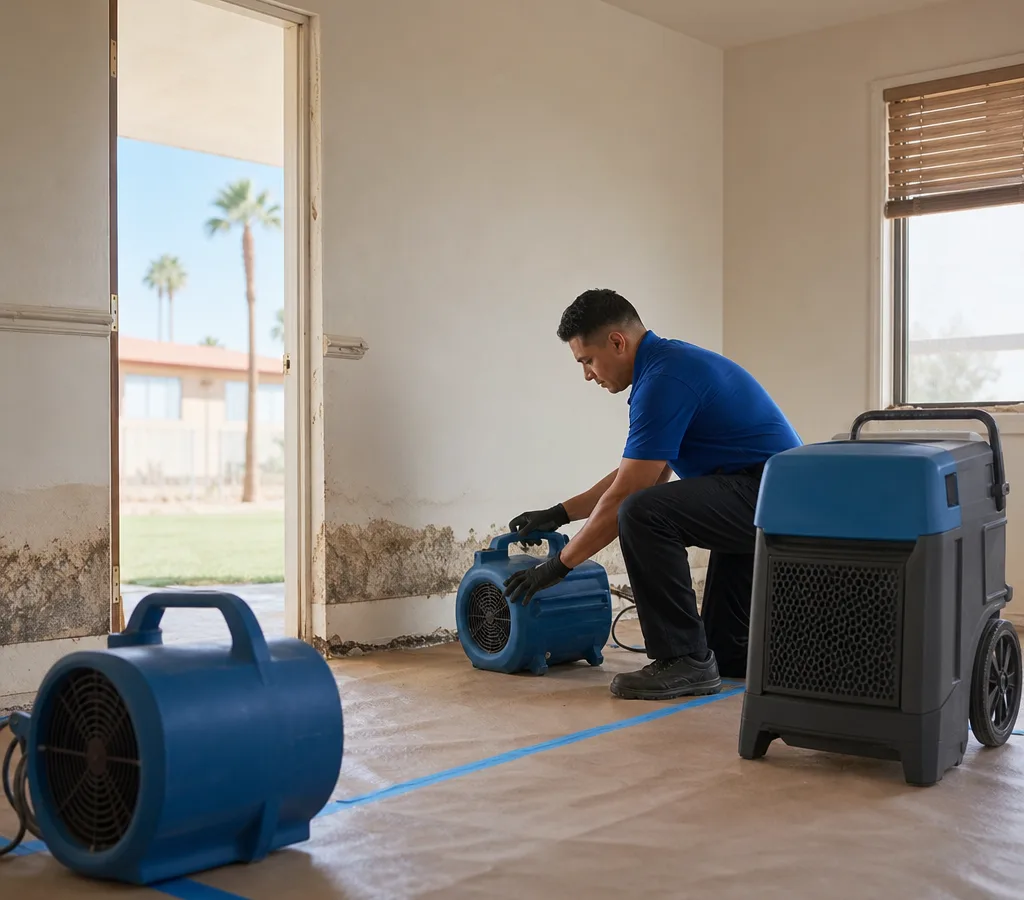
Tempe AZ Water Damage Restoration responds to storm-related losses with the goal of controlling the water, drying the structure, and getting you back to safe, usable space. That means a practical on-site assessment, moisture mapping, and a drying plan sized to the room volume and the materials affected.
In Tempe, we commonly see monsoon losses affect:
If you are starting at the very beginning and want to understand what restoration work typically includes, our team also handles broader water damage restoration in Tempe for non-storm events like supply line failures and appliance leaks.
Storm-Specific Drying
Monsoon events are rarely a slow leak. They can dump a lot of water in a short time, and wind can push rain sideways into openings that look protected in calm weather. That changes both the inspection and the dry-out approach.
We focus on issues that are easy to miss after a storm:
Tempe neighborhoods with a mix of older and newer construction can show different drying behavior. Older finishes may have more layers, while newer builds often use engineered flooring and tighter assemblies that can trap moisture. The right response is a measured dry-out with daily monitoring and adjustments, not a one-size-fits-all equipment drop.
Complete Restoration Scope
We identify where the water is coming from, help you stabilize the situation, and flag safety concerns like wet electrical areas, compromised drywall, or contaminated stormwater.
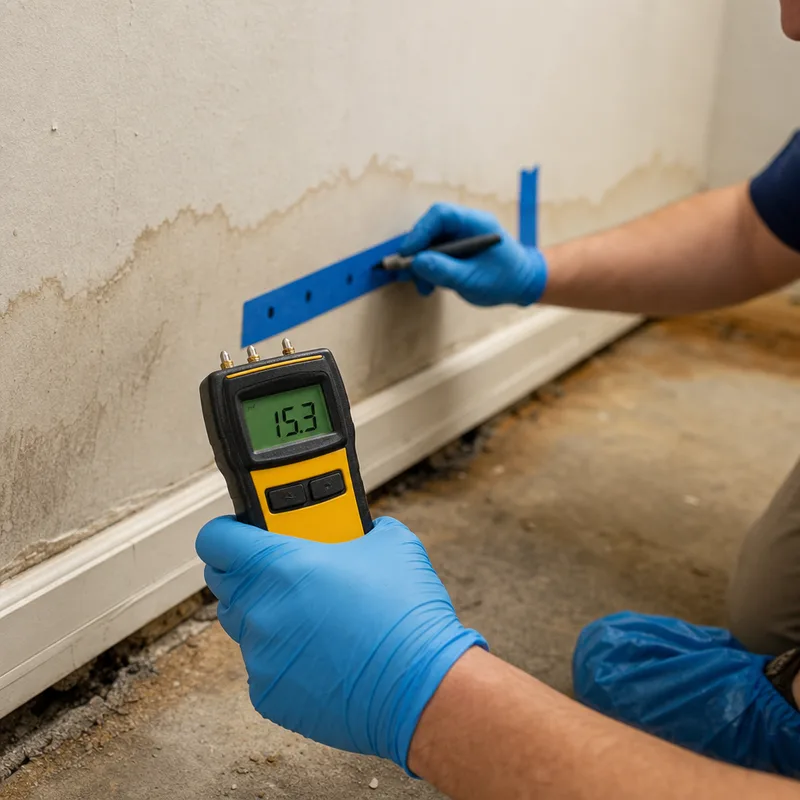
We measure moisture in materials and track drying progress so decisions are based on readings, not guesswork. Documentation also supports claims and property records.
Air movement and dehumidification are set to match room volume and material load. Hot outdoor air can still carry moisture, so we manage humidity and drying, not just temperature.
If wet drywall, insulation, or flooring cannot be dried in place, we remove only what is necessary to access moisture and protect the structure.
Stormwater can bring in soil and organic debris. We clean and apply appropriate antimicrobial treatments when conditions justify it and after affected materials are addressed.
Once drying goals are met, we can handle rebuild items like drywall, baseboards, paint, and flooring transitions so the space is finished, not left in demo-ready condition.
From Water Control to Repair
A measured process finds hidden spread, controls contamination concerns, and verifies that affected materials reach drying goals before repairs begin.
We walk the affected areas, identify likely water paths, and take baseline measurements on drywall, trim, flooring, and adjacent rooms to find spread beyond the obvious wet zone.
Stormwater is often treated as potentially contaminated, which changes handling and cleaning. We also evaluate what can be dried in place versus what must be removed for access.
Standing water is extracted first, then we address saturated surfaces and debris that can slow drying or create odor.
We place air movers and dehumidifiers to create controlled evaporation and capture moisture from the air. Containment may be used to focus drying and protect unaffected areas.
Drying is a managed process. We re-check moisture content, adjust equipment placement, and confirm progress until target readings are met.
After drying, we outline what is needed to rebuild the affected materials. If storm intrusion also caused interior ceiling or wall staining, we plan repairs so finishes match surrounding areas.
Restoration Pricing
Most monsoon water damage restoration work in Tempe typically ranges from about $1,500 to $8,000+, with small, contained intrusions on the low end and multi-room dry-out plus rebuild on the high end. A simple extraction and drying setup may fall around $1,500 to $3,500, while projects that need selective demolition, antimicrobial cleaning, and repairs often run $4,000 to $12,000+.
Final price depends on how far water traveled, including wall cavities, whether stormwater is treated as contaminated, the flooring type, the amount of drywall or insulation affected, access, and how long drying takes. The exact cost is confirmed after an on-site inspection and moisture readings.
After a monsoon blew rain under our patio door, the water spread under the flooring before we even noticed. They found moisture behind the baseboards, set up drying the same day, and kept checking readings until everything was dry. The repair work made the room look normal again.
Alyssa P.
We had water in a small office suite during a storm and needed a fast plan that wouldn't shut us down all week. They contained the area, managed the drying, and documented everything clearly for the claim.
Marco L.
Homeowner Answers
Understand drying timelines, stormwater safety, hidden moisture, and what to expect while restoration equipment is running.
Start mitigation immediately, ideally the same day, because wet drywall, insulation, and flooring can trap moisture and begin deteriorating quickly. Even in Arizona heat, indoor humidity can stay high in a closed home, and moisture can remain in wall cavities unless it is measured and managed with proper drying equipment.
Stormwater is often treated as potentially contaminated because it can carry soil, organic debris, and other pollutants as it runs across exterior surfaces. That classification affects the cleaning steps, what materials can be safely dried, and whether antimicrobial products and selective removal are appropriate.
Sometimes, but it depends on how wet the material is and whether water reached the insulation. Drywall that is saturated at the bottom edge or insulation that is wet usually requires opening the wall to remove compromised material and dry the framing, which is confirmed with moisture readings rather than appearance.
Water often wicks under baseboards, into adjacent rooms, and under flooring. Common signs include swelling at trim, soft drywall near the floor, musty odor after the surface looks dry, or flooring that begins to cup or separate. Moisture meters and infrared scanning help confirm spread beyond what you can see.
Many homes remain occupied during drying, but it depends on noise tolerance, access needs, and whether contaminated water was involved. If stormwater affected living areas or microbial growth is suspected, we may recommend keeping certain rooms closed off until cleaning and drying goals are met.
Drying commonly takes 3 to 5 days, but the timeline depends on material saturation, airflow, and how quickly water was addressed. Repairs can add several days to a few weeks depending on the scope, such as drywall replacement, paint blending, and flooring work.
Act Before Damage Spreads
Tell us what happened and what areas took on water. We will inspect, take moisture readings, and give you a clear scope for drying and restoration so you can make decisions fast and protect the property.