Water category (clean vs. contaminated)
Clean supply-line leaks usually cost less than gray or black water losses because cleaning, PPE, and removal requirements increase with contamination risk.
Serving Tempe, Arizona & surrounding areas
24/7 Emergency Response
One call instead of ten No web forms, no callback spam 24/7 Emergency Response
Restoration Cost Guide · Tempe, Arizona
Get a clear, written scope before work starts: what needs to be dried, what must be removed, what can be saved, and what it will realistically cost in Tempe homes and buildings.
✓ Skip the 3-hour Google rabbit hole — we’ve already done the vetting
✓ One conversation, not ten voicemails and seven web forms
✓ 24/7 emergency response — talk to a real person who actually knows Tempe
Local Pricing Guide
Water damage restoration cost in Tempe, AZ typically ranges from about $1,200 to $7,500 for residential jobs, with larger losses—such as multi-room saturation, ceiling collapse, or contaminated water—commonly reaching $10,000 to $25,000+. A small, contained clean-water incident with fast drying may fall around $800 to $2,500, while a full tear-out with drying, antimicrobial work, and rebuild coordination runs higher.
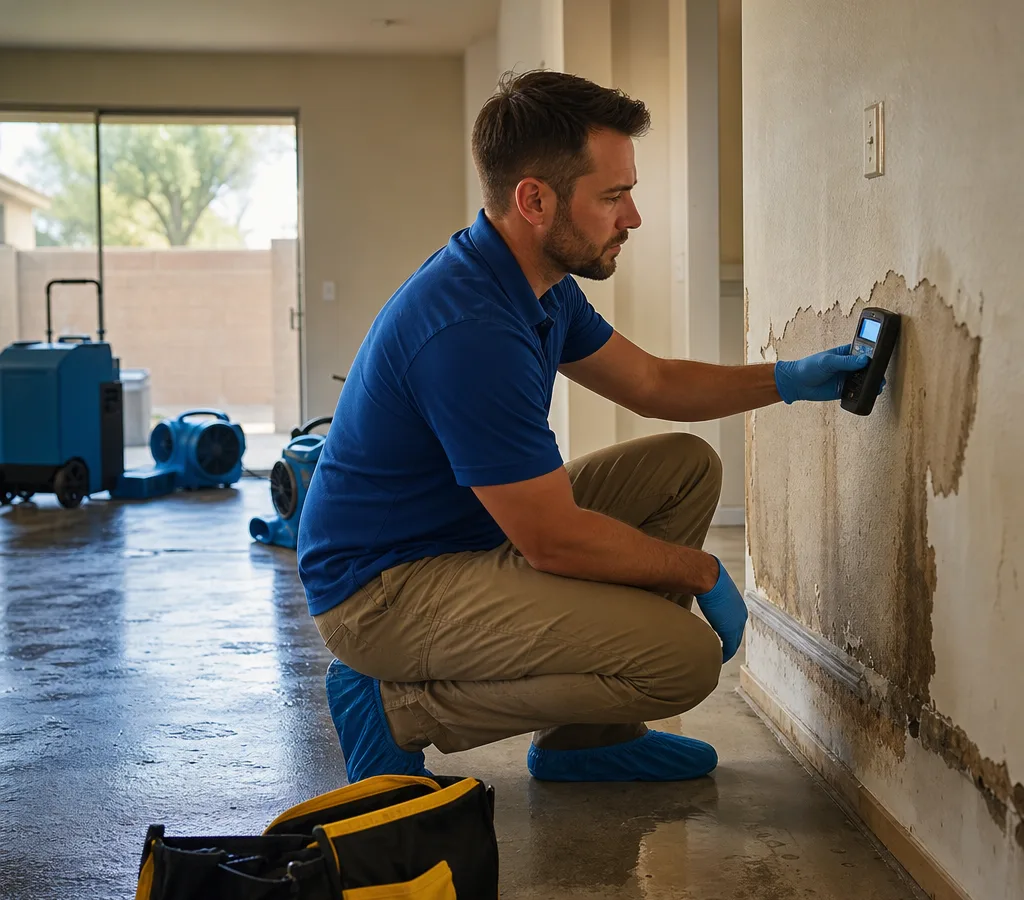
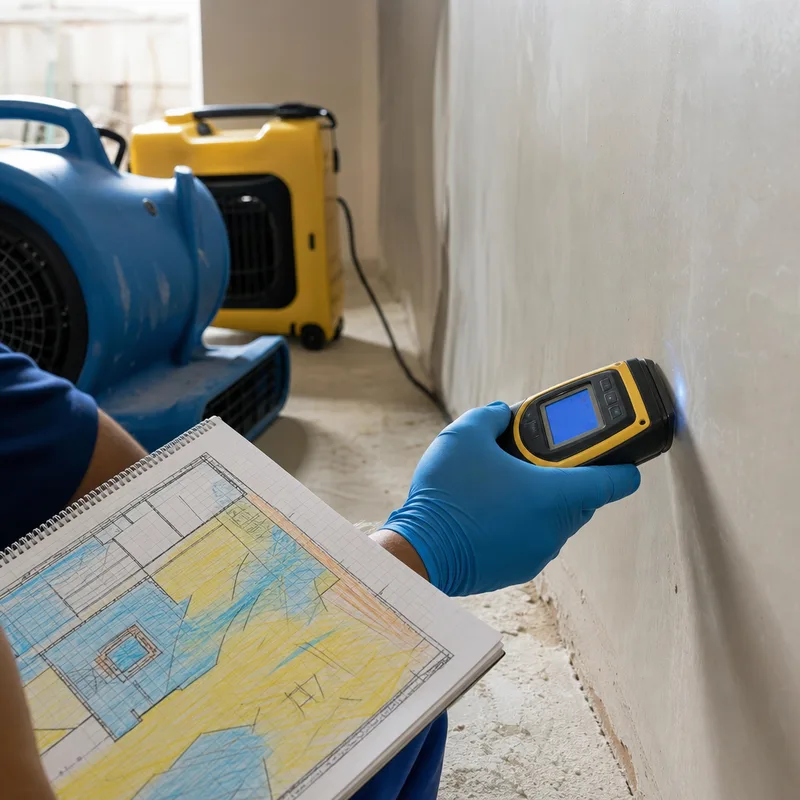
Final price depends on how much area is wet, how long it sat, the water category, the affected materials, and how many days of drying equipment are needed. The exact cost is confirmed after an on-site inspection and moisture mapping.
Understanding the Estimate
When people compare water damage restoration cost Tempe AZ estimates, the biggest difference is usually scope, not a contractor being “high” or “low.” Restoration pricing is built around labor, equipment time, and what has to be removed to reach dry conditions.
A solid quote should separate these pieces:
Two Tempe homes with the same visible puddle can price out differently if one has water under tile and the other is on slab with easy-to-dry surfaces, or if one incident sat for days and pushed moisture into wall cavities.
Local Scope Factors
Local conditions and building details change how quickly a structure dries and how much removal is required.
In older Tempe neighborhoods like Broadmor and Daley Park, you may see older plumbing and wall assemblies that require more exploratory cuts to confirm what is wet. In areas with a mix of condos and multi-family buildings near Downtown Tempe, access rules, elevator use, parking, and after-hours work can affect labor time.
Around South Tempe and newer tracts, finishes can be higher-end, and the restoration scope may include cabinet toe-kicks, engineered wood flooring, or built-ins that require careful removal and documentation.
Seasonally, Tempe's long hot periods can help evaporation in open air, but indoor drying still depends on controlled airflow and dehumidification. If windows are opened during humid monsoon weather, drying can slow down and extend equipment days. That is one reason a professional plan focuses on measured humidity, temperature, and moisture content rather than guesswork.
Tempe AZ Water Damage Restoration evaluates how affected materials should be scoped before repairs begin.
Cost Drivers
Clean supply-line leaks usually cost less than gray or black water losses because cleaning, PPE, and removal requirements increase with contamination risk.
A small affected area with minimal absorption dries faster than water that spread under flooring or into multiple rooms and wall cavities.
Water that sat for 24 to 72 hours often needs more removal and antimicrobial work, and it can extend drying time and monitoring visits.
Drywall, insulation, cabinets, and certain floor types may need partial removal to reach dry conditions. Hard surfaces are often easier to clean and dry.
Tight mechanical rooms, second-story ceiling leaks, and electrical concerns can add labor time. Containment is also a cost driver when dust control matters.
Some quotes stop at mitigation. Others include rebuild coordination. Make sure you know where restoration ends and repairs begin.
Scope Before Work
A measured process connects the source, saturation, equipment plan, removal needs, and final dry standard to a documented scope.
We identify the water source, check affected rooms with moisture meters and thermal imaging where appropriate, and map what is wet, including hidden areas.
We determine the water category and extent of saturation so the plan matches industry-standard drying and cleaning requirements.
You get an itemized scope that explains what will be removed, what will be cleaned, what equipment will run, and how many monitoring visits are expected.
We set equipment, track daily readings, and document progress. If something is not drying as expected, we adjust the plan rather than letting equipment run blindly.
Once materials return to acceptable moisture levels, we document the final readings and outline what comes next for repairs, whether you use us or another contractor.
Customer Proof
The estimate made sense because it explained what was wet behind the wall and why equipment had to run for several days. The final bill matched the written scope.
We had water under our flooring and didn't realize it. The crew showed readings room by room and updated the cost before doing any extra demo.
The breakdown between mitigation work and the later repairs helped us plan our budget. No vague numbers.
Pricing Answers
Compare estimates by looking at verified moisture, water category, equipment days, removal scope, and the line between mitigation and repairs.
The most common reason is that the original scope did not include hidden moisture, required removal, or enough days of drying equipment. A good estimate in Tempe should be based on moisture mapping and water category, then updated only when new wet areas are verified with readings, such as under flooring or inside wall cavities.
Sometimes parts of the work are measured, including affected materials and demo areas, but the total is usually a mix of labor, equipment days, monitoring visits, and specialized cleaning based on the water category. A square-foot number without moisture readings or a drying plan is difficult to compare with a fully scoped estimate.
Mitigation usually means stopping further damage, extracting water, removing wet materials as needed, drying and dehumidifying, cleaning, and documenting dryness. Repairs are the rebuild steps after mitigation, including drywall replacement, texture and paint, flooring replacement, and cabinet work. Separating the two often makes quotes easier to compare.
Clean water, such as a supply-line leak, typically costs less to remediate than gray or black water because cleaning requirements, PPE, removal rules, and disposal practices are more intensive when contamination is possible. If a quote does not state the water category, ask how the cleaning and removal method was selected.
Most residential drying projects take about 3 to 5 days, but it can be longer when water is under flooring, in insulation, or involved multiple rooms. Since equipment is often billed per day and monitoring requires site visits, each additional day can increase the total cost.
Often yes for small, contained losses, but it depends on the affected rooms, noise from air movers, and whether containment is needed for demolition or cleaning. In condos and multi-family buildings near Downtown Tempe, building rules and shared walls can also influence the work plan and timing.
Coverage depends on your policy and the cause of loss, but restoration documentation matters either way. A written scope, photos, moisture readings, and clear separation between mitigation and repairs makes it easier to understand what is being billed and to discuss the claim with your carrier.
Start With Measured Conditions
Tell us what happened and where the water traveled. We will inspect, map the moisture, and give you a written scope with realistic pricing so you can make a decision before any major work begins.